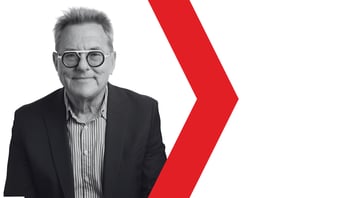
Demystifying the complex: Antenna’s Leigh Shaw on insight, iteration and keeping marketing human
In the latest Capability Spotlight, Antenna’s Leigh Shaw reflects on a career spanning FMCG, construction, infrastructure and government services, and shares why understanding what customers do, not just what they say, will always sit at the heart of effective marketing.
To start, could you share a little about your career to date?
I started my career in FMCG Marketing in the UK - during the time when we did have the internet but the CEO had to sign off every time we accessed it.
Over 12 years I slowly transitioned from Marketing into Insights as I developed a surprising obsession with the data and insights that drive smart marketing decisions. I moved on from FMCG after I had the wonderful opportunities to be Head of Consumer and Market Insights ANZ at both Procter & Gamble and then Unilever.
For the next 10years, I moved between marketing, customer experience and insights roles, often working across them all in the Construction, telecommunications, government and healthcare sectors.
My most recent role was as Chief Customer Officer at Hearing Australia, which I held for almost four years. I am now a partner in a data and insights agency, where I get to play with my beloved data all day and help organisations make smart decisions about how to spend their money, and more importantly, time.
What have been some of the professional highlights along the journey so far?
One standout was “Coles 525”, a full shopper-led reinvention of health and beauty in grocery. At the time, health and beauty aisles were treated like packaged food -functional, undifferentiated and hard to navigate. We went deep into the data, studied how shoppers behaved in different markets globally and conducted extensive customer research locally.
The result was a complete rethink of how people shop the category. We developed clearer segmentation, dedicated sections for beauty, haircare and vitamins, distinct signage and lighting. It was essentially the blueprint for how health and beauty looks in grocery stores today.
Another highlight was bringing insights and data-led marketing into the construction industry. I was one of the first people working in insights in construction in Australia, and initially the idea was met with real resistance. It was a male-dominated, engineering-led environment that didn’t believe marketing – let alone insights – had much value.
One of the biggest breakthroughs came when we realised builders don’t choose products based on technical specs - consumers choose based on how they want their home to look.
That insight shifted the entire marketing approach from product features to lifestyle and design, helping establish concepts like the “Hamptons Home” in Australia. Today, insights teams are standard across the sector, which has been incredibly rewarding to see.
Leading customer experience at Hearing Australia during COVID was another defining moment. As a government-owned provider, we were classified as an essential service but couldn’t open physical locations. Within weeks, we had to design and roll out digital audio hearing care to support not just our customers, but all Australians with hearing loss - one of the most vulnerable groups during lockdowns. The speed, creativity and resilience of the team during that period was extraordinary.
How did you get into the education space and what have you learned from it?
I don’t strictly see myself as being in the education space. My personal mission is making hard things easier, particularly around data and analytics.
If marketers can understand the data themselves - without it feeling geeky or inaccessible – they can make better decisions faster. Anything I do that helps demystify the maths and turn it into insight that people can actually use is, I suppose, a form of education.
What’s one marketing skill or principle you think will never go out of style, no matter how much the industry changes?
Truly understanding what customers want - and giving it to them. I can never see a world where that isn't at the heart of what we do
But customers don’t always tell us what they want in words. They tell us through their behaviour instead.
The ability to read patterns and anomalies in how people act, and using data from the decisions they make every day, will always be fundamental to marketing. That was true a hundred years ago and it will still be true a hundred years from now.
Marketing is evolving fast. Which skills do you think are most critical for marketers to invest in today?
Test, learn and rapid iteration.
We can’t afford long, static models that take three months to gather data for and another three months to run anymore. The idea that you can spend six months building a marketing mix model and then rely on it for years just doesn’t hold up in a media landscape that changes every few months.
Marketers need frameworks that help them read data quickly, form hypotheses, get minimum viable ideas into market and measure in real time. It’s about spending a little, learning a lot and constantly optimising.
What are the biggest challenges you see for marketers trying to keep up with the pace of change in digital and data?
One major challenge is not being able to interpret the data yourself - marketers who feel data is the Finance or Insights domain are really struggling to keep pace. Only the marketer can gather, interpret and act on insights in a way that drives outcomes. When analysis is outsourced to teams focused on models rather than results, speed and effectiveness suffer.
AI is another challenge and opportunity. It will absolutely play a critical role, but not in replacing human understanding. Humans are still better at understanding what other humans want and how to communicate with them. Where AI excels is in analysing data at scale, surfacing patterns, providing comparable case studies and accelerating learning cycles so marketers can iterate faster.
The final challenge is spotting the next major disruption. Smartphones, social media and e-commerce each seemed incremental on their own but together they reshaped entire industries. The marketers who will win over the next few decades are those who don’t just watch emerging technologies, but imagine how they might combine and start experimenting early.
Why do you think continuous learning is so important?
What was true last year will not be true next year. The environment is constantly evolving, and if you decide you already know enough, you start becoming obsolete very quickly.
Continuous learning isn’t about chasing every new trend – it’s about staying mentally flexible and being able to adapt your thinking as the landscape changes.
What role do organisations like ADMA play in shaping the next generation of marketing talent?
There is an enormous amount of poor and contradictory information in the market right now, particularly around AI and data. If you ask ten sources how to solve a marketing problem, you’ll get ten different answers - and not all of them are right.
ADMA provides rigour. It helps separate what’s useful from what’s noise, and trains marketers to apply critical thinking themselves. That means being able to look at an output - whether from an agency or an AI model - and say, “This doesn’t feel right. What questions should I ask next?”
What’s the best piece of professional or life advice you’ve ever received - and how has it shaped your approach?
You can be right, or you can be effective - but you can’t be both.
As a data-driven marketer, it’s easy to focus on having the right answer. But the real job is improving outcomes, not winning arguments. That means using data to know what the right answer is, and then using storytelling and communication to bring others along so change actually happens.
And finally, what do you enjoy doing outside of work?
I breed and show pedigree Bengal cats. It’s far more mathematical and genetics-driven than people expect. It’s also possibly the nerdiest hobby you can have.
ADMA’s NextGen Marketer series
Leigh is the instructor for Tomorrow's Data-driven Marketer. Become the marketer who can connect data, creativity and commercial thinking. Gain the tools to turn information into influence and drive measurable results.